
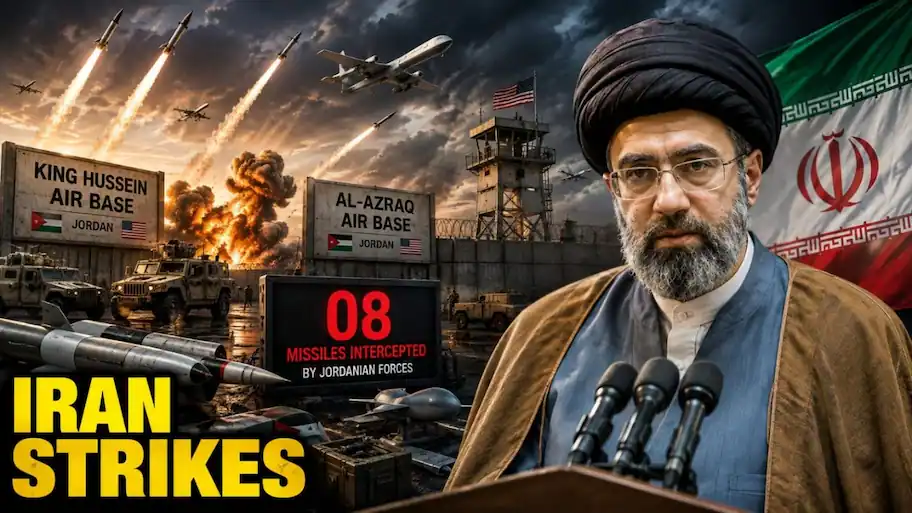
Now, in a major escalation, Iran’s Islamic Revolutionary Guard Corps says it has launched missiles and drones at two US bases in Jordan following the US strike on Larak Island. Iran has faced growing military and economic pressure from the United States as Washington tightens its blockade and targets Iranian military assets near the strategic Strait of Hormuz. Tehran had already warned that any attack would bring retaliation, but the scale and direction of its response remained unclear.
CENTCOM said its forces had redirected 83 commercial vessels, disabled three and boarded two as part of efforts to enforce the blockade, according to the source material. However, US officials said the Iranian missiles did not hit the American bases and reported no casualties or damage. The reported interceptions came as the Iranian attack widened the confrontation beyond Iran’s immediate territory and put US military positions in Jordan on alert. The immediate question is whether the exchange ends with the reported interception of the Iranian missiles or triggers another US response.
The IRGC said its forces attacked two US military bases in Jordan in retaliation for the American strike on Larak Island. Iran said it targeted technical and maintenance infrastructure and areas where US fighter jets were stationed. “Aggression and crimes will not solve the enemy’s desperation in attempting to weaken the Islamic Republic’s control over the Strait of Hormuz, and every attack will be met with even more devastating responses,” the IRGC statement said. Jordanian forces said they intercepted eight missiles fired from Iran. The IRGC said military personnel and civilians were killed or wounded in the US attack on Larak Island. Iran’s Tasnim news agency, citing unofficial reports, said two people were killed and two were injured. IRGC spokesman Hossein Mohebbi called the US action a strategic mistake and said Washington would face costs in both military and economic terms. “This action was a strategic and fatal error by the Trump regime in the course of the economic war, an error that will shift the balance against its planners and will entail heavy costs,” Mohebbi said.
Iranian media identified the targets as King Hussein and Al-Azraq, saying the attack involved ballistic missiles and drones. These figures have not been independently verified. Iran had warned after the strike that the attack would be answered. “The enemy will pay the consequences of this miscalculation in both the economic and military arenas. The military exchange comes as US Central Command continues operations against Iranian shipping. The latest strikes also come amid a broader US campaign of economic pressure against Iran. The combination of military action, sanctions and pressure around the Strait of Hormuz increases the risk of another round of retaliation. With American forces still operating around the Strait of Hormuz and Iran warning of further retaliation, the latest strikes have reopened a direct military confrontation between Washington and Tehran.
Because it follows a period of reduced direct US-Iran military activity, the latest exchange is significant. Reuters reported that the Iranian attack came after the US struck the two Iranian launchers on Larak Island.
US Central Command said its forces struck two IRGC rocket launchers on Larak Island after Iranian forces were observed preparing to launch rockets carrying sea mines into the Strait of Hormuz. The US described the action as necessary to protect shipping through the strategic waterway. Larak Island sits near the Strait of Hormuz, one of the world’s most important routes for energy shipments. The US military has been clearing mines and enforcing a blockade against Iran as Washington increases pressure on Tehran.
