
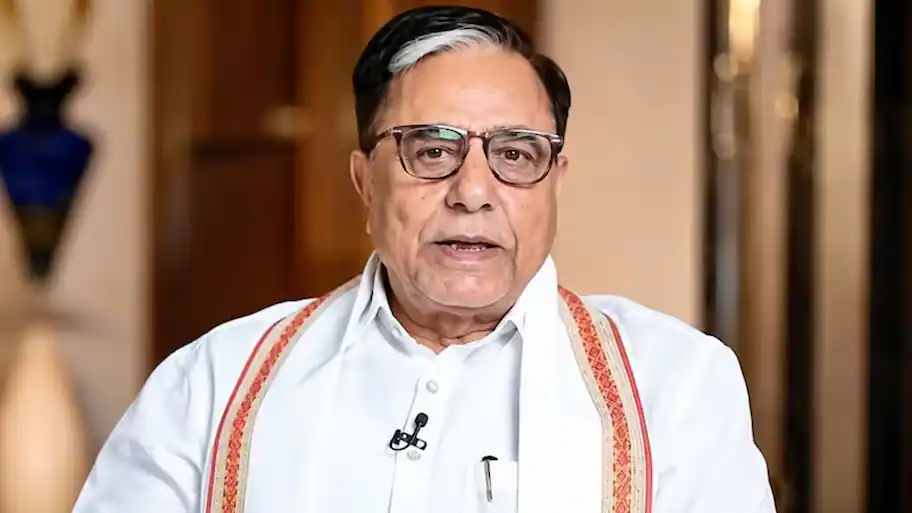
Dr. Subhash Chandra Statement: Essel Group Chairman Dr. He explicitly clarified that he has not borrowed a single rupee in his personal capacity. Dr. Chandra made all facts and figures related to his ongoing personal insolvency proceedings at the National Company Law Tribunal (NCLT) public to dispel any confusion surrounding the matter.
Subhash Chandra took to the social media platform Instagram on Monday morning to bring complete transparency to his personal insolvency case in the public domain.
During the live interaction on Monday (August 31) at 9:00 AM, Dr. Chandra revealed that he acted as a guarantor for 18 to 20 borrowing entities. Chandra clarified that in his affidavit submitted to the Election Commission, he had declared total assets worth Rs 39 crore. Currently, his total assets stand at approximately Rs 31 crore, marking a decline of about Rs 8 crore over the past decade.
Chandra directly answered questions from viewers. Most inquiries during the session centred around the spread of misinformation regarding loan waivers and prevailing public confusion. A primary question raised by many participants was the difference between a borrower and a guarantor. Addressing this, Dr. Chandra clarified that he was merely a guarantor and not the actual borrower. He explained that he had stood as a guarantor for various companies. Discussions have already been held with the actual borrowers, and all remaining dues will be paid back. Emphasising that every pending amount will be cleared, he reiterated the fundamental legal distinction between taking a loan and acting as a guarantor. When asked about the total number of firms for which he provided guarantees, Dr. He noted that all these borrowers were directly or indirectly linked to the Essel Group. Answering a user’s question about whether he guaranteed unknown individuals, Dr. Chandra stated that he only endorsed guarantees for people he personally knew. There was no one on that list whom he was unfamiliar with; the list included either family members or close associates. During the session, a user questioned his personal net worth. Dr. In response to another query, Dr. Chandra reaffirmed that these loans were procured by the companies for business expansion—for which he stood as a guarantor. The funds were not utilised for personal gain, but rather to expand corporate operations, generate widespread employment, and contribute in a modest way to India’s economy. Dr. Chandra candidly admitted that offering those guarantees was perhaps his biggest mistake, acknowledging that it is precisely what led to his current situation. Addressing a question regarding future business ventures, Dr. Chandra disclosed that he is indeed planning a major new startup. He noted that while individuals facing insolvency typically avoid launching new businesses, he intends to do otherwise while strictly adhering to the law. He affirmed that he plans to move forward with a new startup in collaboration with a few friends and partners. Addressing a user’s question regarding loan waivers, Dr. Chandra firmly stated that banks have not waived the loans. Whatever amount remains due will be paid back in full. He concluded by reiterating the core distinction: while a borrower receives the funds, a guarantor simply assures that the debt will be repaid.
