
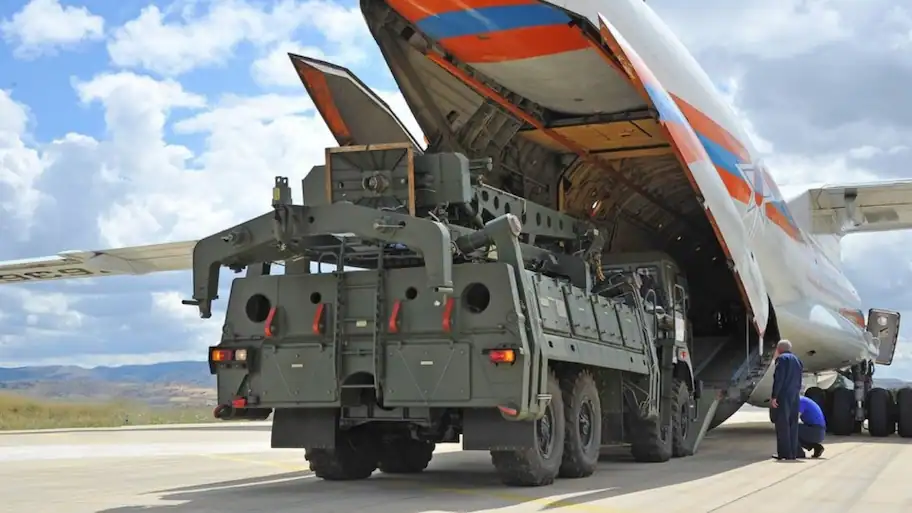
Russia has submitted a detailed proposal to India’s Defence Ministry in response to a tender for five additional squadrons of the S-400 ‘Sudarshan’ long-range air defence system for the Indian Air Force.
The development comes as India looks to further strengthen its air defence capabilities following the S-400’s reported role during Operation Sindoor. The project is estimated to cost more than Rs 50,000 crore. The project is estimated to cost over Rs 50,000 crore,” Defence sources told ANI. India cleared the proposal to acquire five additional S-400 squadrons in March this year, shortly after the conclusion of Operation Sindoor.
If the new contract is signed, deliveries of the additional missile systems are likely to begin around three years after the agreement is concluded.
Defence sources said the Russian response to the Indian tender has been received and is currently being processed. “The Russian response to the Indian tender has been received, and it is being processed at the moment.
India had earlier signed a contract with Russia in 2018 for five S-400 squadrons. The S-400 was reported to have played a key role in countering Pakistani attempts to strike targets inside India during Operation Sindoor. Western Air Command chief Air Marshal Jeetendra Mishra recently said in an ANI podcast that the S-400 carried out what was possibly the longest-ever recorded surface-to-air missile kill. The system destroyed a Pakistan Air Force surveillance aircraft from a range of 314 kilometres, according to him. Mishra also said the S-400 was responsible for bringing down several Pakistani fighter aircraft, including Chinese-supplied J-10 jets. He further revealed that Pakistan had deployed spies and activated sleeper cells in India in an effort to locate the S-400 systems during Operation Sindoor. Alongside the planned procurement of additional S-400 units, India is also acquiring more than 280 missiles for the systems to increase its existing stock. The project recently recorded an initial success after a simulated target was intercepted at a range of around 140 kilometres.
Four of these squadrons have already been delivered, while the fifth and final unit is expected to arrive by November this year. The new units are expected to be deployed along both the eastern and western fronts, further strengthening India’s layered air defence network. At the same time, India is working on an indigenous long-range air defence system under Project Kusha. India is also planning to establish a large-scale air defence shield across the country under Mission Sudarshan Chakra. Several major systems are being acquired by different agencies as part of the initiative. (with ANI inputs)
