
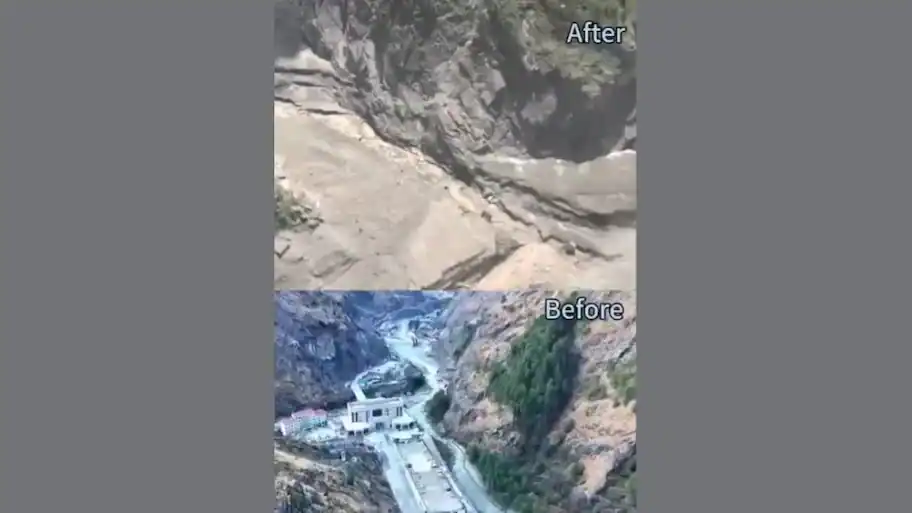
Kathmandu: What began as a phone call warning of a flood in Nepal’s Trishuli River soon turned into a devastating story of villages destroyed within minutes.
Arjun Poudel, a health reporter with The Kathmandu Post, was heading to his office in Kathmandu on Wednesday (August 26) morning when his wife called to tell him that flooding had hit Trishuli, with reports that Sole Bazaar and Betrawati had been badly affected. The settlement stood nearly 100 metres above the riverbed and had never experienced a flood reaching that height in living memory. A local teacher told him that around 90 percent of the houses in Betrawati were gone.
Nepal and Tibet had signed a peace treaty there after their war, while Uttar Ganga Dham attracts thousands of pilgrims during Pushya Amawasya to honour their dead.
There are videos of them panicking,” she told him. Not Mummy, not Buwa, not my uncle, my aunt, nobody’s phone is even ringing,” Niranjan told him. You can imagine the rest yourself,” he told Poudel. If you can arrange a helicopter, please send one” the teacher said. I am hanging up now,” he said. I don’t even know what is happening to my own house,” he said. There is no road, no bridge and no vehicle can move,” one villager said.
“There has been a flood in Trishuli. Something has happened to Sole Bazaar and Betrawati. People are saying there is nothing left. Everyone is out on the road. He initially struggled to believe the reports. Sole was his village, a place where he had spent his childhood, played in the lanes, worked in the fields and walked to school. Betrawati Bazaar was equally familiar. It was where people from surrounding villages went to shop and where buses stopped for passengers travelling towards Kathmandu. The town was also home to religious and cultural sites, including a Ram temple and a Krishna temple. Its Newar heritage brought celebrations such as Gai Jatra, while bull-fighting events during Maghe Sankranti drew crowds from Kathmandu. Within hours, Poudel was receiving reports that much of this had been swept away. He contacted Niranjan, a journalist whose family lived in Sole Bazaar. His family members could not be reached. “I just heard too, dai. I cannot get through to anyone. The calls continued as Poudel made his way to work. Eventually, he reached a relative’s house. The relative’s wife answered the phone and gave him a message that was difficult to absorb. “There’s nothing left in the village. Most of the people are gone,” she informed him. Poudel began calling relatives, neighbours and childhood friends. As photographs and videos reached his phone, the scale of the destruction became clearer. His eldest aunt had been swept away. Her son Madhu and his wife were also gone. Another aunt is missing, along with her grandson Sijan and his wife. Sijan’s son and daughter-in-law are untracable. Poudel’s maternal uncle had gone out that morning to cut grass for cattle and never returned. The ward chair, Rabindra Nepal, was also stranded at the municipality office. “Bhai, I came to the municipality office early this morning, and I am stuck here now. Some villagers survived by scrambling up the cliffside as the water swept through the settlement. “I can’t find my own family, bhai. Ninety percent of the houses in Betrawati are gone. The school van was swept away too. There is a boy here with a broken leg, and another man beside me has a broken leg and a badly injured eye. Niranjan’s uncle later called with news that his father, mother, uncle, aunt and younger sister Himani had all been taken by the flood. “We are finished, Arjun. The destruction extended far beyond homes and families. Betrawati was also a historic and religious centre. The flood left these places in ruins. A neighbour pleaded near a rescue helicopter bound for the Army training centre in Battar. “My uncle and aunt were swept away. Their phones are dead. “If someone falls sick now, I suppose they will have to die at home. How would you even get them to a hospital?
Built in 2024, the old bridge over the Trishuli connecting Dhunge with Trishuli Bazaar was destroyed. The Bhainse bridge and suspension bridges across the river were lost as well. Roads, electricity, phone networks and internet connections were cut off. The flood destroyed the Trishuli hydropower station’s headgate before reaching the power station itself. Poudel later travelled with friends towards the district headquarters and saw the extent of the blackout. Villagers who had travelled to Bidur for work or other needs were stranded there. Patients who had arrived at hospitals for treatment could not get back to their homes. The damage to transport networks has made rescue and relief work even more difficult. Villages including Bhairamkot, Samari, Toksar, Deurali, Kispang, Kaule, Bhalche and Salme have been cut off. Tharpu across the border in Dhading has also been affected, while Rasuwa district has been severed from the road network. The district hospital at Baghtar is now difficult to reach from surrounding communities.
A newer bridge built only a few years earlier was also swept away.
‘Will this place ever become what it used to be?’
Because the mills have also been destroyed, fields have been washed away, while grain stored in homes cannot be processed.
The question now being repeated by local residents is painful, “Will this place ever become what it used to be?” The flood has also destroyed basic supplies and livelihoods. The local market that served surrounding villages is gone, leaving people with few places to buy essentials. Many residents have been displaced, while families continue searching for relatives who have not been accounted for. Poudel had set out to reach his village and had been travelling for almost a day and a half. He was still stuck at the district headquarters in Bidur, unable to continue. A village that had never experienced a flood of this scale was devastated within minutes.
