
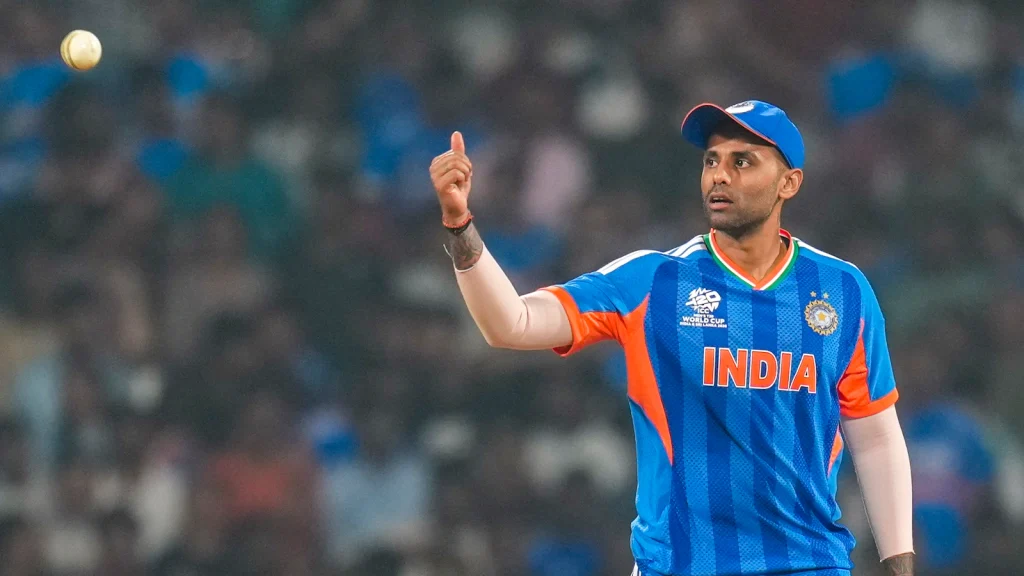
1 batter in the world in the T20 format, surprisingly failed to produce the desired results in ODIs, the other white-ball format. Suryakumar Yadav , once the No. ODIs is a format where he received enough backing, but simply didn’t produce results to keep hold of his spot in the team While he didn’t get enough opportunities in Test cricket. Now out of India’s T20I team too, Suryakumar confessed that he didn’t work hard enough on his ODI batting, and takes complete responsibility for the failure in the format.
Suryakumar Yadav scored 773 runs in 35 ODI innings at an average of 25.76 and a strike rate of over 105, with four fifties and a highest score of 72 not-out.
“Hypothetically, we can say anything – that if I had come into the team in 2016, I could have played Tests and probably done well in ODIs too. 4, or four down for 24 if you are batting at No. 6. You may bat at a strike rate of 50 or sometimes 75, then take it to 100 and eventually finish at 130 or 140, much like you do in T20 cricket,” he added. 5 or 6, but even then, I did not work hard enough to understand the format. By the time I could blink, those 20-25 games had gone. In 37 ODIs for India, Surya scored 773 runs in 35 innings at an average of 25.76 and a strike rate of over 105, with four fifties and a highest score of 72 not-out.
Because i did not put in the extra effort that I put in now when I play T20 cricket, i take the blame myself.
“It was a white-ball format, just like T20s, but to be very honest, I personally feel I did not put in as much effort as I should have for that format,” Suryakumar Yadav said on Aakash Chopra ‘s YouTube channel. If I bat for an hour, I will practise for an hour and a half,” he said. But the reality is that I played only one Test and one innings. After that, the other players came back and started playing again, so it didn’t happen. But definitely, I am disappointed with myself when it comes to ODI cricket. “I feel ODI cricket is probably the most difficult format to play as a batter, whether you are batting lower down the order or anywhere else. You can be two down for zero if you are batting at No. Anything can happen. You have to bat almost like you do in a Test match. You see off the bowlers initially, give them respect and slowly build your innings. “Personally, I feel I could not crack how to approach that format. I knew I was probably going to bat at No. I don’t even know when it happened or how it went by. And yes, I definitely regret not playing more ODI cricket. I wonder why I could not do better in that format. But no one is to blame.
