
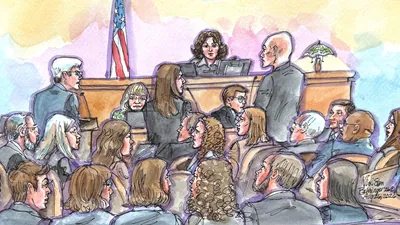
A significant federal trial has concluded just eight days after it began, marking the end of the largest coordinated legal action by state prosecutors against a social media company to date. This development highlights the increasing scrutiny and regulatory challenges facing tech firms in the current political landscape.
The four states leading the coalition, California, Colorado, Kentucky and New Jersey, had begun opening statements before US district judge Yvonne Gonzalez Rogers on August 18. Meta pays only 70% of the $18 billion cap unless TikTok, owned by ByteDance, and YouTube, owned by Alphabet, sign on to similar teen-safety changes, according to CNN Business. Meta’s 2025 revenues were $201 billion, and its market capitalisation stood at close to $1.5 trillion on the day the deal was announced. On that base, $1.8 billion a year over a decade comes to well under 1%, and a small fraction of quarterly free cash flow. The New Mexico attorney general secured a separate state-court judgment against Meta earlier this month, in which a judge ordered the company to pay $567 million and make similar design changes after finding it had contributed to a youth mental-health crisis.
The settlement was announced the day after Instagram head Adam Mosseri finished his testimony denying, under cross-examination, that Meta had hidden safety information from the public.
It has agreed to set daily time limits on teen accounts, offer teens an optional non-personalised feed that does not use algorithmic recommendation, remove beautification filters from the teen experience, hide ‘Like’ counts on teen accounts, and strengthen its age-gating processes, according to court filings by AP and CNN. “Ensuring teens have a safe and productive experience on our platforms is an absolute imperative for Meta,” the company said in a blog post on Wednesday. Bonta said the agreement “institutes real change, real transparency, real protections for children and teens across the country”. Meta has said it will appeal.
Meta chief executive Mark Zuckerberg, who had been on the witness list, will not take the stand now. Meta will also make design changes to its platforms, but only for teen users in the US. Meta made no admission of wrongdoing. “We want to get this right for parents and teens, and that’s why we partnered with state attorneys general to set a new industry standard. A consequential clause in the settlement is that the payment mechanism ties Meta’s total outlay to the behaviour of its competitors.
US Settlement Influences India’s Social Media Regulations
The recent settlement in the United States is expected to bolster discussions between Union IT Minister Ashwini Vaishnaw and major social media companies. The Indian government is currently engaged in talks with these tech firms to explore potential age-based restrictions on social media usage and enhance protections for minors. This dialogue comes as part of a broader examination of how to safeguard young users in the digital landscape.
