
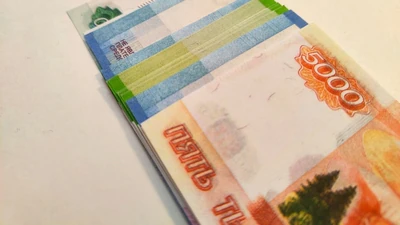
On August 5th the Ministry of Finance declared that it would increase its daily purchases of foreign currencies and gold by around 20%, from 5.4bn roubles (then $69m) in July to 6.5bn roubles. The rouble duly slid, from around 80 to the dollar in early August to beyond 85 by the middle of the month, its lowest level since March. GOVERNMENTS AND central banks usually insist that they want a strong currency. Not, just now, in Russia.
As Russians know well, a sudden slide can trigger financial panic, as it did after their country invaded Ukraine in February 2022 and Western countries imposed sanctions. Granted, the Gulf war, by gumming up the Strait of Hormuz and disrupting global oil distribution, has pushed oil prices higher: in the first half of the year the average oil price used by the government for tax calculations was $68 per barrel, against the $59 assumed in the budget. Even so, oil and gas revenue, at 3.7trn roubles, was 23% lower than a year earlier. The first-half deficit alone was 5.7trn roubles, or 2.5% of annual GDP, against a projected 3.8trn (1.6%) for the full year. The inflation rate has already ticked up, to 6% in June.
This was partly due to a petrol shortage caused by Ukrainian strikes on Russian oil infrastructure. In just over a fortnight the rouble lost two-fifths of its value against the dollar. A stronger currency means cheaper imports, lower inflation and less pressure on interest rates; a weaker one means the opposite. Russians rushed to buy foreign currency and pulled cash out of banks, much of which they splurged on consumer durables and other goods. A persistently strong rouble would make the shortfall bigger. A weaker rouble could provide some short-term relief to Russia’s budget, but in the long run, it carries the usual downsides: higher inflation, dearer imports and lower real household incomes. Nonetheless, a weaker rouble could push it higher.
