
Thousands of kilometres away, a different maritime route is giving Tehran another way to receive essential supplies and, according to reports, military equipment from Russia. New Delhi: The United States has deployed naval power to enforce a blockade on Iran’s ports and restrict its access to the Strait of Hormuz.
Iran’s diplomatic message
The 2018 Convention on the Legal Status of the Caspian Sea bars armed forces from countries outside the five littoral states from operating there and says ships entering and leaving the Caspian must fly the flag of one of those states. The Caspian has therefore become an important part of Iran’s economic and military strategy.
On August 8, he called it the “best time” to reach an agreement, saying there was “cohesion, strength and unity” in Iran. He also said Iran was regarded as having emerged from the war “victorious and strong”. In May, he posted verse 64 of Surah Al-Imran on X, beginning with an appeal to the “People of the Scripture” to come to a common and equitable word. Pezeshkian has said that Tehran is open to negotiations while seeking terms it considers acceptable.
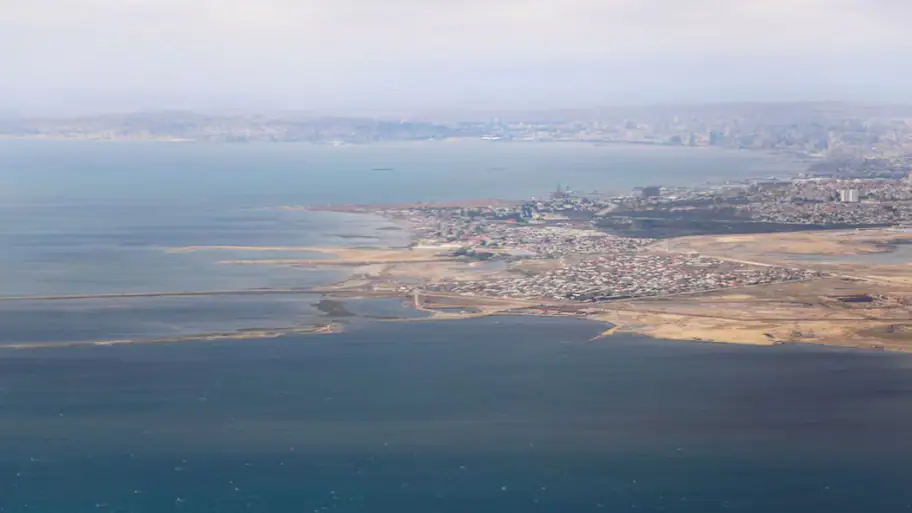
The route is the Caspian Sea, which is a landlocked body of water bordered by Russia, Iran, Kazakhstan, Turkmenistan and Azerbaijan. This gives Russia and Iran a route where the US Navy has no direct military presence. Recent reports have provided details about what is moving through the waterway. Tehran has also been using diplomacy along with its military and economic measures. President Masoud Pezeshkian has repeatedly called for an agreement with Washington while emphasising Iran’s position and national interests. The verse ends with the words, “Bear witness that we are Muslims. The Caspian route also strengthens Iran’s position. Iran has a northern supply channel, access to Russian support and a strategic waterway outside direct US naval control. The US blockade can put heavy pressure on Iran’s southern ports, while the Caspian gives Tehran another route for goods and military supplies. The situation shows how geography can be as important as military power. Washington can control large parts of the waters around Iran, while Russia and Tehran can use the legally restricted inland sea to keep another supply route open.
He also used Quranic verses in his public messaging earlier in the war.
US assessments cited by the Center for Strategic and International Studies estimated that Iran had used around 60% of its drones during the war. Another assessment cited by the centre said Iran retained about 40% of its pre-war drone arsenal. The UN Food and Agriculture Organization estimates that Iran will need around 11 million tonnes of maize in 2026. Under the 2018 convention, the five Caspian states agreed to the non-presence of armed forces belonging to countries outside the group. On July 25, Ukrainian forces struck several sanctioned cargo vessels that Russia was using to transport military cargo between Russia and Iran.
Because iran is also facing difficulties with its domestic supply chains, the scale of the food trade is important. Because of demand from the livestock and poultry sectors, that is about 9% above its five-year average, mainly. The reported deliveries had reached Iran’s Amirabad port in Mazandaran province, with more than two dozen Russian ships involved. The reported shipments came after weeks of US and Israeli strikes on Iranian military infrastructure. The reported shipments show a two-way flow of weapons and military equipment between the two countries. The reported Russian deliveries come as Iran works to restore parts of its military supply chain damaged during the fighting.
Which cited a European government document and a Western official who verified it, Russia had been sending drone components, ammunition and trinitrotoluene (TNT) explosives to Iran through the Caspian Sea, according to NBC News. The Institute for the Study of War said the vessels were reportedly involved in military cargo movements between the two countries. Critical Threats Project said the transfers are evidence of active Russian military support for Iran and its drone programme.
The Institute for the Study of War also cited the report in its assessment of Russia’s military support for Iran. The Caspian route has practical military value for Tehran. Drone components can enter through a waterway that is outside the direct reach of the US naval blockade around Iran’s southern ports. There is also a history behind the flow of drone technology. Iran supplied Shahed drones and related technology to Russia during the Ukraine war. Russia later began producing its own versions under an Iranian licence. Reports suggest that some of the military trade is now moving in the opposite direction, with Moscow supplying Iran with components and other military material. The Caspian corridor is not limited to military cargo. Iran has four ports on its Caspian coast, including Amirabad and Bandar Anzali. Iranian officials have been using the northern route to bring in wheat, corn, barley, animal feed and other essential goods as the disruption around Hormuz affects southern maritime trade. That gives the Caspian a second role in Iran’s wartime economy. The same network of ports and ships can support ordinary imports while also handling cargo that helps Tehran rebuild military stocks. The geography of the Caspian makes it different from the Persian Gulf. The United States can deploy naval forces around the Gulf and the Arabian Sea. The Caspian is governed by the five countries that surround it. Navigation into and out of the sea is also restricted to ships flying the flag of one of the five parties. That does not make the route invisible. Ships can be tracked through commercial and government systems, and Ukraine has shown that the Caspian route can face military risks. Some ships on the route can switch off or manipulate their tracking signals. Recent shipping data has recorded vessels going dark during voyages around Iran, making them difficult to monitor in real time. Moscow has its own reasons for helping Tehran. Russia and Iran have built military ties during the Ukraine war, including cooperation on drones and military technology. A functioning Iranian military also gives Russia a partner capable of keeping pressure on the United States and its allies in the Middle East. This gives Moscow another way to support Tehran without sending Russian naval forces into the Persian Gulf. Russia has called for diplomacy and an end to the fighting. At the same time, reports of its shipments to Iran show how Moscow is supporting Tehran during the war.
