
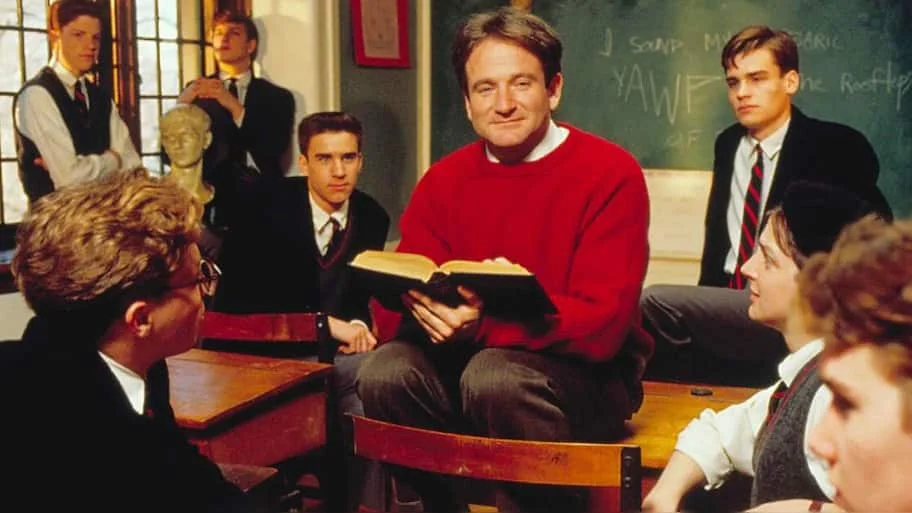
It’s a direct challenge to a room full of students who’ve never once been told that their time might actually run out before they’ve done anything with it. Dialogue of the Day: Some lines become so widely quoted that they start to lose their original weight, turned into posters and graduation speeches until the phrase itself feels almost too familiar to mean much. But in the context of the film, this line isn’t decoration.
Released in 1989 and directed by Peter Weir, Dead Poets Society follows an unconventional English teacher, John Keating, who inspires his students at a conservative boarding school to think independently and pursue their own passions, often at odds with the rigid expectations placed on them. Starring Robin Williams in one of his most celebrated roles, the film became a touchstone for generations of students and educators alike, and this line remains its most enduring legacy, still repeated wherever someone needs a reminder not to let their own life slip by unlived.
Because it was expected, it means lived deliberately, chosen intentionally, rather than passively accepted.
What makes the line particularly pointed is who it’s being said to. These aren’t students lacking opportunity or resources. They’re privileged boys at an elite, tradition bound school, groomed from childhood toward conventional, safe, prestigious futures, futures largely decided for them by their families rather than chosen by themselves. Keating’s challenge isn’t about achieving more in a conventional sense. It’s about actually choosing their own path, rather than sleepwalking through a life someone else designed for them. There’s also something quietly urgent buried underneath the inspirational tone. Extraordinary, in Keating’s framing, doesn’t necessarily mean famous or exceptional by outside standards. The tragedy the film is warning against isn’t failure. It’s living an entire life on autopilot and never noticing until it’s too late that you never actually decided any of it for yourself. Maybe that’s exactly why this line has outlasted the film itself, showing up in speeches and yearbooks decades later. Stripped of its context it can feel like a simple call to ambition. But inside the story, it’s something closer to a plea, not to wait for permission, not to assume there’s unlimited time, and not to let someone else’s version of an acceptable life quietly replace your own.
