
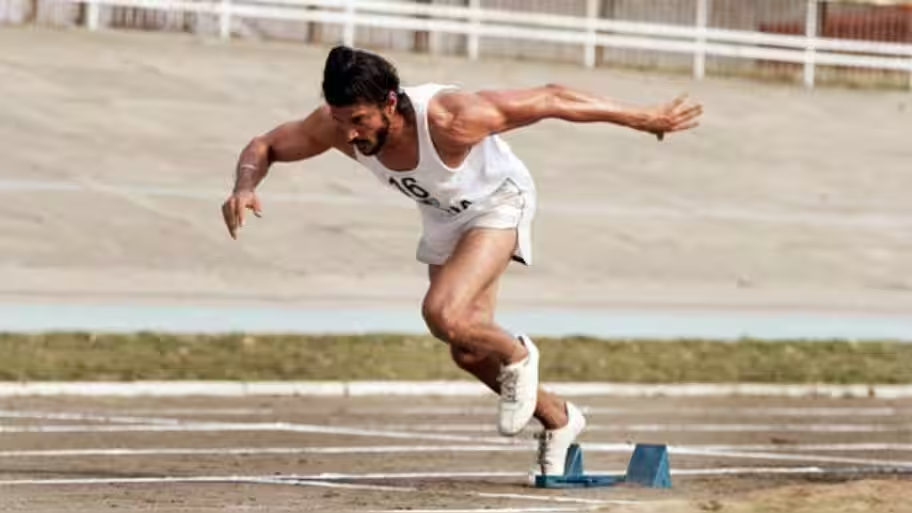
Because the film never lets you forget what Milkha is actually running from, this one doesn’t, mostly. Dialogue of the Day: Sports films love a good motivational line, but most of them fade the moment you leave the theatre. It isn’t just competitors on a track. It’s a past soaked in loss and trauma that never fully lets go, and this line captures the only way he’s found to survive it, by refusing to stand still long enough to let it catch him.
Released in 2013 and directed by Rakeysh Omprakash Mehra, Bhaag Milkha Bhaag tells the real life story of Milkha Singh, the legendary Indian sprinter known as the Flying Sikh, tracing his journey from the trauma of Partition to becoming one of India’s greatest athletes. Because it captures both the literal and emotional weight of what it meant for Milkha to keep running, long after the finish line stopped being the point, starring Farhan Akhtar in a physically transformative role, the film became known for grounding its sports drama in deep emotional trauma, and this line remains one of its most quoted precisely. On the surface, it’s straightforward advice for an athlete, keep going, don’t quit, push through the pain. But the film spends its entire runtime giving that sentence a much heavier meaning. Milkha’s story isn’t just about training and competition. It is more about the trauma of Partition, the pain of losing his family, and memories that never leave him alone. Running, for him, becomes less about sport and more about survival, a way of outrunning grief that never fully goes away. There’s also something quietly honest in how simple the phrasing is. It doesn’t dress up the idea with grand imagery. It just states the terms plainly, breath equals movement, movement equals survival. That bluntness mirrors Milkha’s own approach to life in the film. He isn’t a naturally poetic or expressive character. He processes his pain the only way he knows how, physically, relentlessly, one stride at a time. What gives the line its staying power beyond the film is how easily it applies outside of athletics. Everyone carries something they’re running from in one form or another, grief, failure, fear, circumstances they didn’t choose. The line doesn’t claim that running solves any of that. It simply argues that as long as you’re breathing, stopping isn’t the answer either. Movement, even imperfect, exhausting movement, is still better than letting whatever you’re running from finally catch up.
