
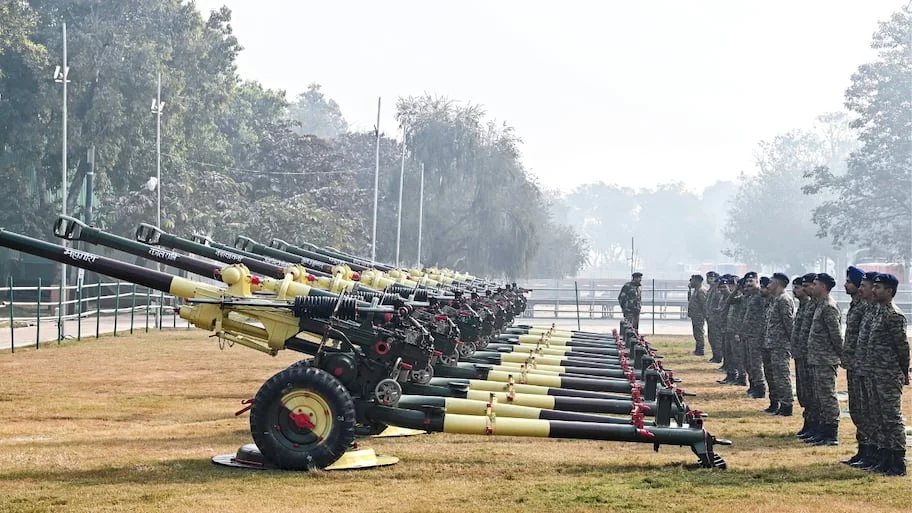
Every year, as the National Flag rises over the Red Fort on Independence Day and the tricolour is unfurled at Kartavya Path on Republic Day, the sound of artillery fire adds a powerful military dimension to the national ceremonies.
Why is the 21-gun salute fired on both Independence Day and Republic Day?
Red Fort ceremony includes the ceremonial National Flag ceremony, the National Anthem and a 21-gun salute, followed by the Prime Minister’s address. Government releases have consistently described the 21-gun salute as part of this sequence. Every August 15, as the Prime Minister hoists the Tricolour at the Red Fort, and every January 26, as the President unfurls it at Kartavya Path, those 21 rounds connect India’s present with a centuries-old military tradition.
Because gunpowder could be stored more easily and in greater quantities on land, this was partly.
Seven guns became associated with the naval salute, while shore batteries could fire three rounds for every shot fired from a ship, according to the US Naval History and Heritage Command. The practice gradually developed into a formal military courtesy. The central ceremony takes place at the Red Fort in New Delhi, where the Prime Minister addresses the nation after the ceremonial hoisting of the National Flag. On Republic Day, the salute accompanies the National Flag unfurled by the President of India and the National Anthem at Kartavya Path. The exact ceremonial arrangements can vary over time. Official government releases have identified different ceremonial field batteries on different Independence Day and Republic Day occasions. The change was widely noted at the time, and official government releases in subsequent years have continued to identify indigenous 105mm field guns as the weapons used for the ceremonial salute.
