
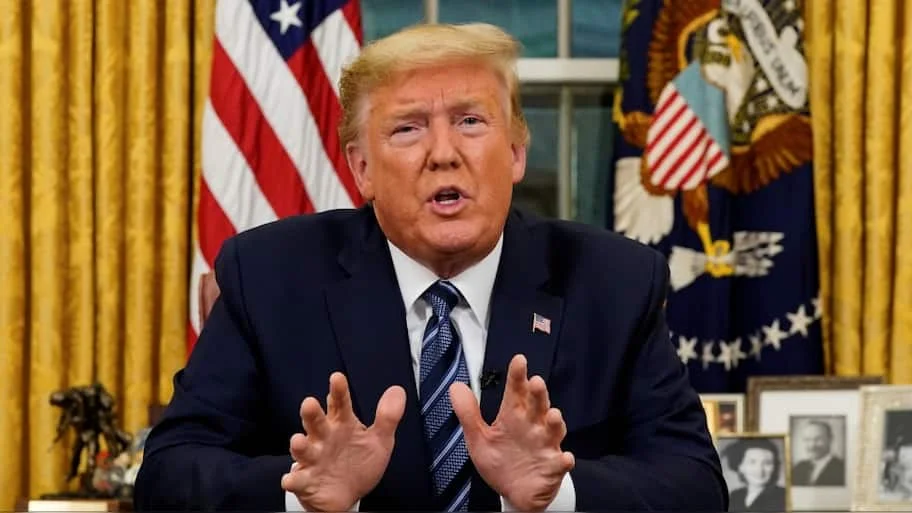
US President Donald Trump may be looking for a way to end the military confrontation with Iran without securing a formal nuclear agreement, as efforts to resolve the conflict become increasingly difficult, The Wall Street Journal reported.
The Trump administration could set aside the nuclear issue and declare victory if Tehran agrees to fully reopen the Strait of Hormuz, a crucial route for global energy shipments, according to the report.
Political Context
Diplomatic efforts suffered another setback over the weekend after the United Arab Emirates said Iran had launched a missile strike against one of its vessels. For Trump, a settlement also carries domestic political significance ahead of the US midterm elections. Petrol prices remain well above pre-war levels, putting pressure on the administration to show voters that the military campaign has delivered tangible results. Vice President JD Vance, meanwhile, indicated that Washington would continue putting pressure on Tehran to bring about longer-term changes in its relationship with the US. “We’re talking to the Iranians, of course. “We’re just trying to make sure that we get what we need out of this particular conflict. Vance emphasized that the US intends to keep squeezing Iran while watching for fundamental shifts in Tehran’s stance toward Washington. Resolving the maritime bottleneck is viewed as a vital catalyst for broader regional peace efforts. “There is progress between Oman and Iran on the strait, and we expect a deal soon. Trump reiterated his optimism over the Strait of Hormuz negotiations while doubling down on the firm US position against Iran acquiring nuclear capability.
Araghchi noted that Tehran had been following Clause 5 of the 14-point Memorandum of Understanding previously brokered in Islamabad, which envisioned a return to normal traffic within a month, according to Al Jazeera. He stated that traffic had already recovered to 60 percent of normal capacity within two weeks before Washington attempted to establish alternative shipping lines through the strait despite Tehran’s objections.
Trump has spent weeks preparing for such an outcome and has privately told senior aides that he could withdraw from the confrontation without reaching a formal nuclear deal with Iran, the report said. Trump told reporters in recent days that he had been ready to launch what he described as the biggest military attack since World War II, but said US allies had persuaded him against doing so. He has also said that a deal with Iran was “imminent”, although no formal agreement has been reached. Trump has previously said his administration would not give American taxpayers’ money to Iran. But US officials cited by The Wall Street Journal said a settlement could prove impossible without Washington agreeing to release some Iranian assets, potentially subject to conditions. We’re trying to maximise the amount of oil and gas that is coming out of the Strait of Hormuz,” Vance said. “We’ve destroyed their nuclear program, we’ve destroyed their conventional military, we’ve radically reduced their asymmetric military abilities,” he said, adding that Washington is now evaluating whether Iran is prepared for “the kind of long-term changes that would be necessary to have a better relationship with the United States. Speaking to Reuters on condition of anonymity, the official said Washington expects an agreement soon between Oman and Iran, the two coastal nations flanking the strait, allowing standard commercial oil tankers to resume normal operations. Once the deal is announced to restore commercial shipping without impediments, the United States will lift the blockade of Iranian ports,” the official was quoted as saying, noting that relief will remain strictly “performance-based and tied to Iran’s implementation of its commitments. The developments follow remarks from US President Donald Trump on Thursday, who expressed confidence that the conflict with Iran would draw to a close “pretty soon,” observing that the Islamic Republic “can’t go much longer.
The United States is actively working to secure safe passage for commercial shipping through the crucial Strait of Hormuz, even as it maintains intense pressure on Tehran, US Vice President JD Vance stated on Saturday. Despite Washington’s push, Iranian Foreign Minister Abbas Araghchi cautioned on Saturday that ongoing talks with Oman to regulate waterway traffic do not signal an immediate reopening of the Strait of Hormuz.
