
On August 15, 1947, people in the region raised the Indian tricolour in Rangamati, believing their homeland had become part of India. New Delhi: The Chittagong Hill Tracts (CHT) has one of the strangest stories of Partition. Two days later, a radio announcement changed their fate: the area had been awarded to Pakistan.
Political Context
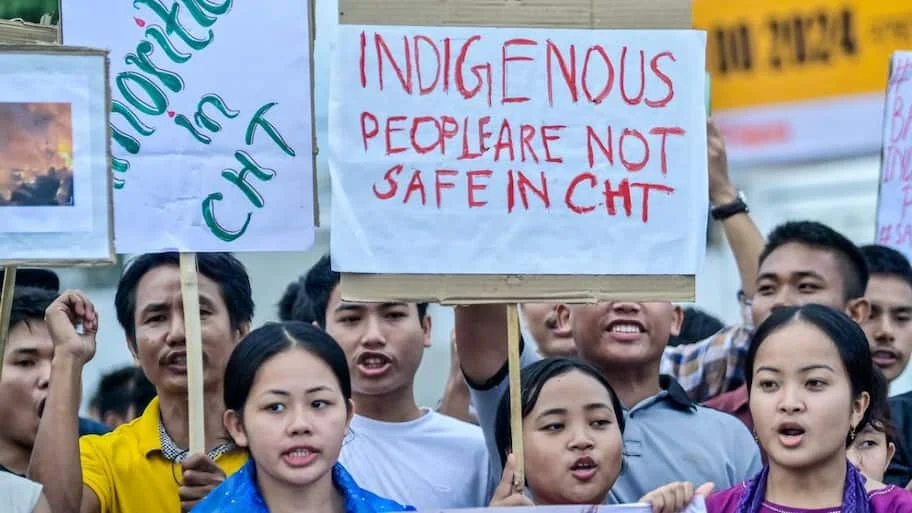
The region also had a separate administrative history under the British rule. That history helped strengthen the belief among local leaders that the CHT would not be placed in Muslim-majority East Bengal. The political leadership in India had also been given assurances by local representatives. The records also show that Nehru was not the only leader in Delhi to object. Then Law Minister Dr B R Ambedkar and Industry and Supply Minister Syama Prasad Mukherjee later prepared a joint note against the Bengal boundary decision. Lord Mountbatten, the last viceroy of British India and first governor-general of independent India, defended the decision by pointing to the CHT’s economic ties with Chittagong and the importance of controlling the Karnaphuli River and the port. A proposal for adjusting the territory was considered but did not lead to an agreement. Santi Chakma later described the community’s experience in even broader terms. “The Chakmas and other tribal groups of Chittagong Hill Tracts are the most unfortunate people, who were orphaned by the Partition. Historian and academic Ranabir Samaddar described the hardships faced by the Chakma community over the years.
The Chittagong Hill Tracts Regulation of 1900 gave the area a special status and kept much of its administration outside the normal system used in Bengal. He referred to the area’s 97 per cent Buddhist and Hindu population.
He referred to the region’s predominantly Hindu population and said its chiefs wanted to join the Indian Union. “I have assured them that no such question arises, and that these Chittagong hill tracts form part of the Indian Union,” he wrote. In the records of the August 16 meeting at Government House in New Delhi, Nehru said that he and his Congress colleagues had assured the chiefs from the hill tracts that “there was no question of the territory being included in Pakistan”. They called it “unjust and unfair” and said it went against the basic principles of Partition and the guidelines given to the Boundary Commission. Mountbatten also said he had urged Nehru “to take no step about the Chittagong Hill Tracts other than to invite the Government of Pakistan to have a friendly discussion about the matter in the first place”. Nehru agreed, according to the record. Initially the Pakistani government and later military dictatorships of Bangladesh reduced us to a minority and took away our land by government-sponsored demographic invasion,” he said. “Much more than partition or the Kaptai Dam displacements, the throttling of tribal identity by the Sheikh Mujib government in Bangladesh and the later displacement of Chakma tribals by plains settlers have been disasters for them,” he said.
