
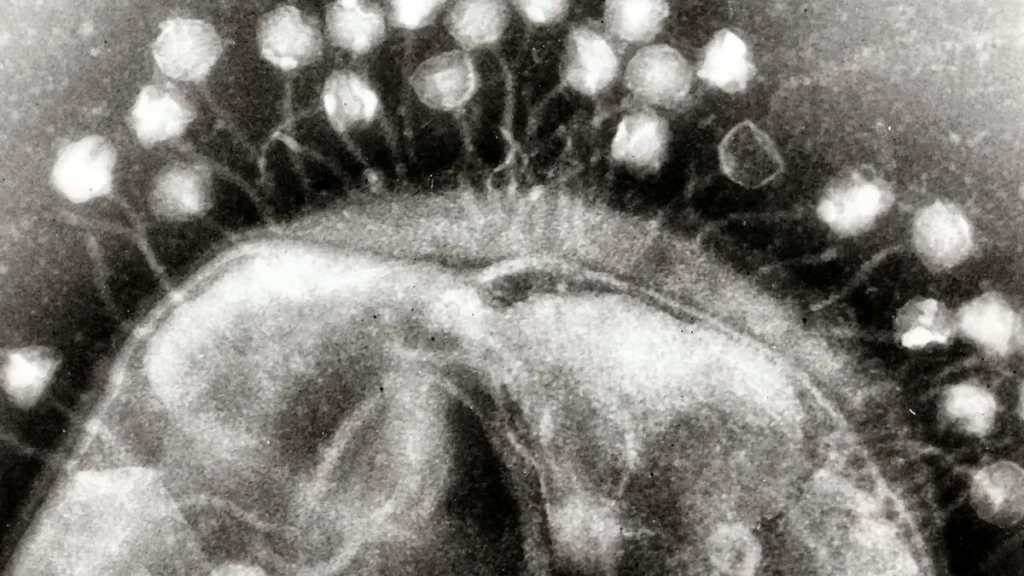
Recent advancements in artificial intelligence (AI) have enabled scientists to engineer viruses specifically aimed at combating resilient bacterial strains. This innovative approach seeks to address the growing concern of antibiotic resistance, which has rendered many conventional treatments ineffective. By utilizing AI, researchers can design viruses that selectively target and eliminate these tough bacteria, potentially offering a new avenue for treatment. This development highlights the intersection of technology and healthcare in the fight against persistent infections.
What Happened
Scientists have used AI to design entire genomes for bacteriophages, viruses that infect and kill bacteria. These phages were different from any found in nature, and could together successfully kill bacteria known to resist natural viruses. The work offers a path to create treatments to fight drug-resistant bacteria. Cepaea nemoralis snails produce five types of mucus for different tasks, such as crawling, sticking to surfaces, and defence, ‘tuning’ the properties using calcium. Most animal mucus is slippery but snail mucus is versatile. Scientists found that it contains collagen VI as the building block, with the snails secreting calcium carbonate granules to adjust thickness and stickiness. This simple adjustment creates anything from a lubricant to a protective barrier, and could inspire new materials in medicine.
Using ‘genome language models’, they generated thousands of new DNA sequences, then used them with a well-studied virus called ΦX174 as a template to yield 16 functional viruses.
